Learning Kernewek: Month 4 – Complexity, Confidence, and Letting Go of Perfection

A Language Project in Practice – Ragdres Yeth yn Praktis

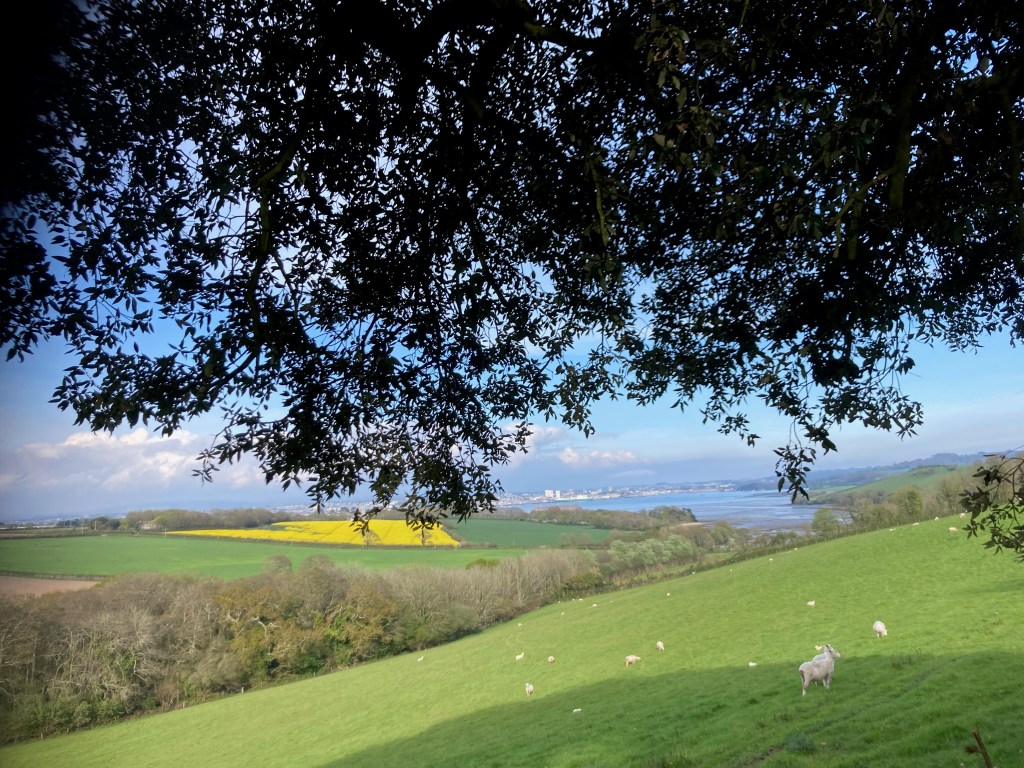
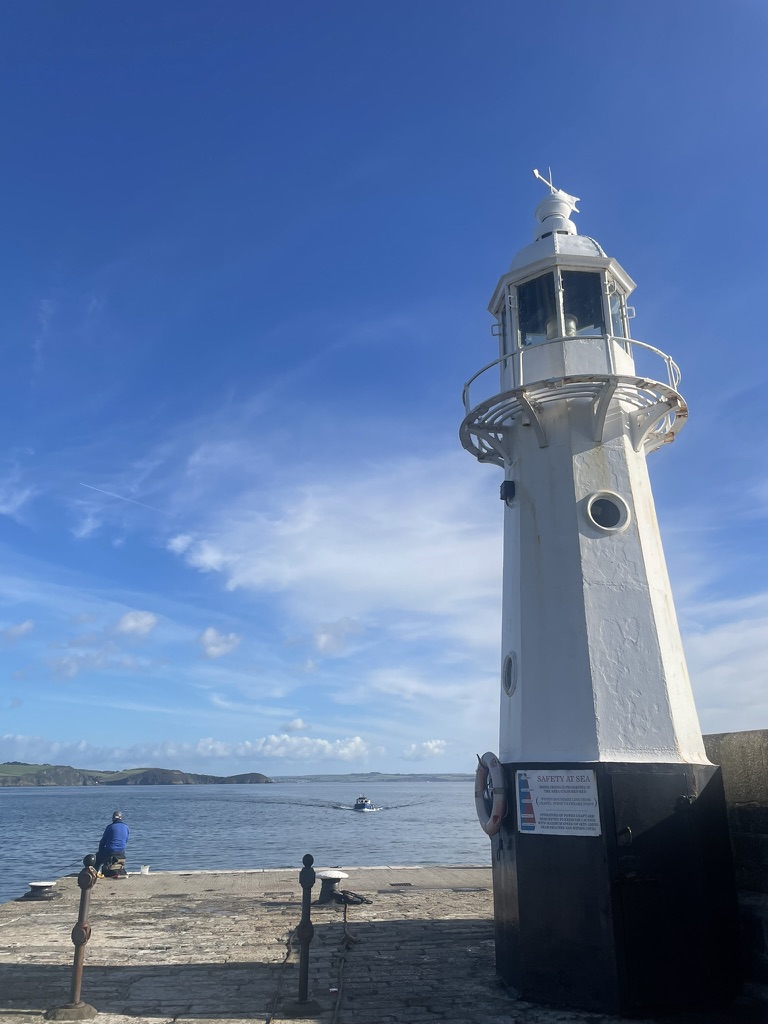
Lighthouse, Mevagissey / Golowji, Lannvorek, Kernew – photo author’s own.

Dydh da.

Peswar mis a dhysk Kernewek a veu passys lemmyn.

An mis ma a omglewas differens bras. Nyns o hemma yn unnig a-dro dhe dhyski lavarow nowydh, mes a-dro dhe dhyski fatel pesya gans ansikkerder.

Good day.

Four months of learning Cornish have now passed.

This month felt noticeably different. It was no longer only about learning new words, but about learning how to continue despite uncertainty.

Earlier months often felt like building: adding vocabulary, recognising patterns, constructing simple sentences. Month 4 felt more like stretching. The structures became longer, the clauses more tangled, and the language less stable.

At times, it felt as though the learning process itself was being tested.

When the Language Gets Harder

The clearest development this month has been the increase in structural complexity.

Lessons increasingly involved:

  • conditionals
  • linked clauses
  • past constructions
  • hypothetical situations

Sentences such as:

Mar pethen vy…
(If I were…)

or:

Ny wrug ev leverel dhymm pyth ev a vynnas
(He didn’t tell me what he wanted)

began to appear more regularly.

Unlike vocabulary learning, these structures are difficult because they require several things to happen simultaneously:

  • recalling grammar
  • organising clause order
  • managing tense
  • keeping the overall meaning in mind

At times, the process felt like walking a tightrope. I could often produce around 80% of a sentence while the remaining 20% hovered just beyond reach.

Interestingly, the difficulty did not usually come from encountering completely new material. More often, it came from trying to coordinate things I partly already knew.

This month made it very clear that language learning is not simply accumulation. Complexity creates its own kind of pressure.

Speaking Without Knowing Everything

One of the most important changes this month has been psychological rather than linguistic.

Earlier on, gaps in knowledge often felt like barriers. Now they increasingly feel like spaces to work around.

If I cannot remember an exact structure, I try to say something close enough:

  • rebuilding sentences from fragments
  • substituting simpler constructions
  • temporarily borrowing from Welsh
  • restructuring ideas in real time

What I jokingly called “Caveman Cornish” last month has started to become something more useful: functional approximation.

Rather than stopping communication, approximation keeps the language moving.

This has changed the way I think about fluency. Fluency no longer means producing perfect sentences. It increasingly means: keeping going, maintaining meaning, and surviving uncertainty without switching back into English.

The “80% rule” continues to matter here. As long as most of a structure is accessible, I move forward rather than waiting for total mastery. Paradoxically, this often seems to help the language settle more naturally over time.

Welsh Carrying Some of the Load

Welsh continues to play a central role in the learning process, but again its function has shifted slightly this month.

Earlier on, Welsh mainly acted as support: shared vocabulary, similar grammar, familiar sentence patterns. Now it feels more like a constantly active parallel system.

Sometimes the connections are obvious:

gweyth / gwaith
hireth / hiraeth
Dy’ Yow / Dydd Iau

At other times, the interaction is more complicated.

There were moments this month when I expected Cornish to behave like Welsh and it simply did not. For example, Welsh often uses English-derived vocabulary where Cornish preserves older Brythonic forms:

problem → kudyn

And sometimes when I was expecting a Welsh cognate, an English one appears:
offer → provyans / provya

At the same time, influence increasingly started moving in both directions.

One evening at our Welsh conversation group, rather embarrassingly, I completely forgot the Welsh word ceffyl (“horse”), despite having known it for years; since school even. Instead, the Cornish/Breton word margh came to mind first. That small moment felt surprisingly significant.

Cornish no longer seems to exist only as a learner project sitting beside Welsh. It is beginning to occupy space within the same mental linguistic system.

What is emerging feels less like “transfer” between separate languages and more like movement within a shared Brythonic linguistic environment.

Repetition, Rustiness, and Recovery

This month also disrupted the idea that progress should always feel linear.

After a short holiday and a break from Cornish practice, I returned feeling a little rusty. Familiar structures suddenly felt unstable, especially the conditionals.

For a while, this created genuine panic: had I forgotten more than I realised?

But something interesting happened.

After repeating lessons, reviewing old patterns, and revisiting earlier material, the language came back surprisingly quickly. In some cases, repetition actually produced stronger fluency than before.

Accidentally repeating one lesson led to a noticeable jump in confidence and automaticity. Structures that had previously felt fragile suddenly became much easier to retrieve.

This month has made me think differently about repetition.

Review no longer feels like “going backwards”. It feels developmental in its own right.

Some structures now feel deeply embedded: patterns from the very beginning of the course still reappear naturally during speech.

Others remain unstable, particularly:

  • conditionals
  • continuous past constructions
  • pronouns linked to prepositions

But overall, the recovery from rustiness felt reassuring. The language appears more resilient than I had assumed.

From Learning a Language to Entering a Community

Another important development this month has been increased participation in the social side of the language.

I began volunteering as a tester for a Cornish learning app, became more active in WhatsApp discussions, and signed up for another An Werin Warlinen online session.

Small things also started to shift psychologically.

Friends began sending me articles about the Cornish revival. I found myself reading more Cornish messages online without immediately having to translate them word by painful word. Discussions in the community increasingly felt accessible rather than distant.

There were also interesting overlaps between Welsh and Cornish spaces. A Welsh/Cornish speaker I know is going to appear on Welsh-language media (Radio Cymru) soon, discussing learning Cornish and the language’s revival. Also, conversations about Cornish emerged naturally inside Welsh-speaking contexts, such as the Welsh language chat group I attend here in Exeter (Clwb Clebran Caerwysg), and the online Welsh class I am taking with Cardiff University.

This reinforced something I have increasingly noticed throughout the project:
revived minority languages do not exist in isolation.

They exist socially, culturally, and emotionally, through networks of learners, speakers, supporters, and neighbouring languages.

Level 3 and a Different Kind of Confidence

This month also marked the completion of Level 2 and the beginning of Level 3 in the SSIW course.

Crossing into a new level felt important, though perhaps not in the way I expected.

Earlier in the project, new levels sometimes felt a little intimidating. This time, the transition felt more manageable. The lessons were still difficult in places, but the difficulty no longer felt threatening in the same way.

That may be the most important shift of all.

I am not necessarily becoming dramatically more accurate. But I am becoming more comfortable continuing despite imperfection.

The language increasingly feels less like something I need to solve before using and more like something I can participate in while still learning.

Looking Ahead

At the end of Month 4, the project feels both less stable and more secure.

Less stable because the language is becoming more complex:
more clauses, more variation, more ambiguity, and more interference between systems.

But more secure because I increasingly trust that communication can continue even when everything is not fully under control.

The most important development this month may simply be this:
learning how to keep speaking anyway.

Ha lemmyn yth esov ow mos yn rag gans nebes moy a gyfyans.

And now I move forward with a little more confidence.

Meur ras!

Trebanessa!

Month 4 Vocabulary

Some words and expressions that stood out this month:

mar pethen vy — if I were
kudyn — problem
provyans — offer
heb kost — free of charge
kyns — before
bys — until
gortheb — answer
krambla — to climb
gasa vy — let me
margh — horse / steed

Research Note – Month 4 (for those interested in the learning process)

(April–May 2026)

Learning process

Shift from pattern consolidation toward structural expansion and strategic fluency

Increased tolerance of ambiguity and partial recall during real-time production

Key linguistic developments

Greater exposure to:

  • conditionals
  • multi-clause structures
  • linked past constructions

Increased awareness of:

  • register variation
  • lexical nuance
  • grammatical alternatives

Cross-linguistic interaction

Welsh continues functioning as a scaffold system

Evidence of increasingly multidirectional interaction:
Welsh → Cornish and Cornish → Welsh

Emergence of a more integrated Brythonic linguistic repertoire

Learning behaviour

Strong reliance on approximation and reconstruction strategies

Review and repetition shown to improve automaticity significantly

Progress increasingly linked to resilience and recovery rather than linear accumulation

Sociolinguistic dimension

Expanded participation in Cornish-speaking spaces:

  • app testing
  • WhatsApp interaction
  • online community events

Increased perception of Cornish as socially meaningful rather than purely academic

Emerging research themes

Strategic fluency under cognitive pressure

Approximation as productive communicative behaviour

Recovery and resilience in adult language learning

Multilingual interaction within related minority languages

Participation and confidence-building in revived language communities

Learning Kernewek: Month 3 – From Patterns to Participation

A Language Project in Practice – Ragdres Yeth yn Praktis

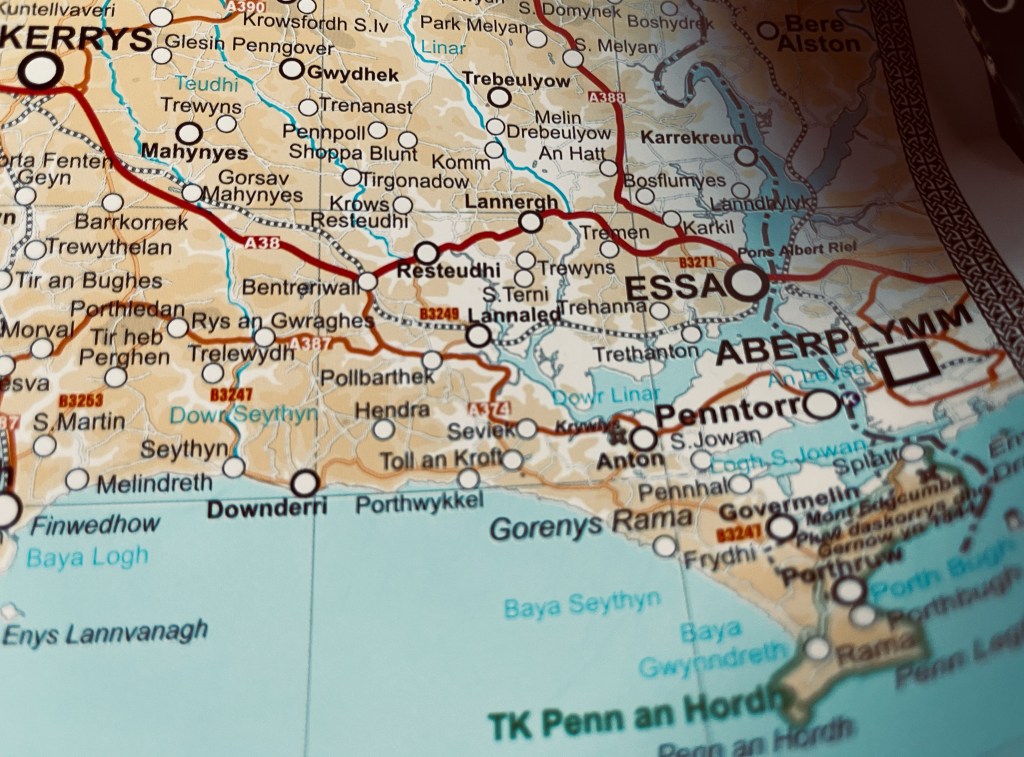
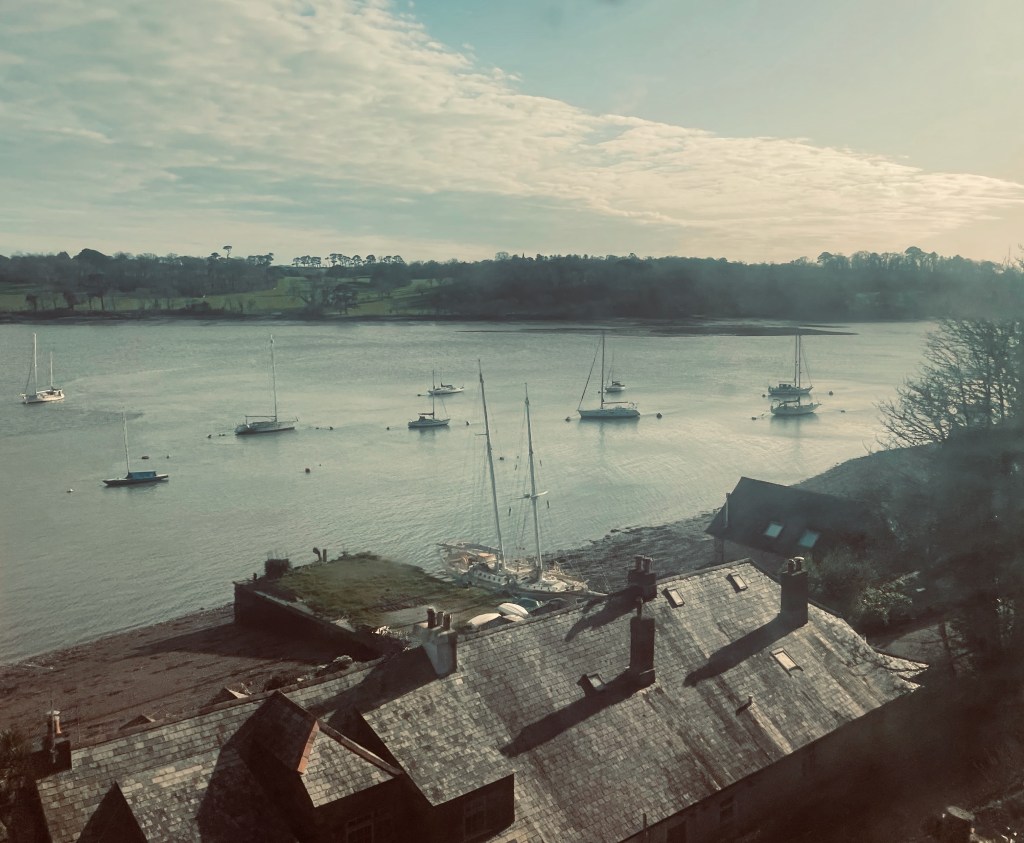
Saltash/Essa – Photo – author’s own

Dydh da.

Tri mis a dhysk Kernewek a veu passys lemmyn.

Yn an termyn ma, yma chenjans dhe weles: nyns yw hemma yn unnig a-dro dhe lavarow ha patrymmow, mes a-dro dhe’n yeth ow mos dhe vos bev.

Good day.

Three months of learning Cornish have now passed.

During this time, something has begun to change: this is no longer only about words and patterns, but about the language starting to feel alive.

From Patterns to Structure

At the end of the third month, the learning process has begun to shift in a noticeable way.

Earlier stages focused heavily on recognising and reproducing patterns. This month, those patterns have started to combine into longer and more flexible sentences. Structures that once felt like isolated chunks are gradually becoming tools for building meaning in real time.

Working through lessons now often involves multi-clause sentences, past tense constructions, and more complex forms such as:

Ny wodhas vy bos hi o kewsel Kernewek
(I didn’t know that she spoke Cornish)

These kinds of sentences are not always stable yet, but they represent a clear step forward. The language is becoming something I use, rather than something I repeat.

The “80% rule” continues to guide the process. As long as I can produce most of a structure, I move on. This has kept the learning dynamic and avoided the trap of over-perfection.

Welsh as System, Not Just Support

Welsh continues to play a central role, but its function is becoming more complex.

Earlier on, Welsh mainly acted as a bridge: helping with vocabulary and familiar structures. Now it feels more like a parallel system that I am constantly negotiating with.

Sometimes it supports production:

bledhyn / blwyddyn
pan / pan

At other times, it interferes:

expecting Welsh particles where Cornish does not use them, mixing verb–preposition patterns between the two languages

There are even moments where the influence goes in both directions, with Cornish forms briefly appearing when speaking Welsh.

What is emerging is not simply “transfer”, but something closer to a Brythonic linguistic space, where the boundaries between languages are present but permeable.

New Challenges: Grammar, Not Words

One of the clearest developments this month is that difficulty is shifting away from vocabulary and toward structure.

Two recurring challenges stand out:

  • Negative indefinites
    (e.g. den vyth – “nobody”)
  • Plural pronouns and agreement systems
    (e.g. yth eson ni, yth esons i, yth esowgh hwi)

These require more real-time processing and are harder to stabilise than individual words.

Another interesting feature is the need to work around English concepts. Instead of directly translating “should”, for example, Cornish often prefers expressions closer to:

“I must”
“I need to”
“It would be better”

This reinforces the sense that learning the language involves adapting to a different structural logic, rather than mapping English directly onto Cornish.

Approximation and “Caveman Cornish”

Not every day has felt smooth.

There are moments when my fluency drops, due to fatigue, distraction, or simply not feeling at my best. On one occasion, even familiar words slipped away and had to be reconstructed through cognates, such as rediscovering triya (“to try”) via its similarity to Welsh trio.

At times like this, I have found myself producing what I jokingly call “caveman Cornish”: simplified, approximate sentences built from whatever is available.

Surprisingly, this has been a positive development.

Rather than blocking communication, approximation allows the language to keep moving. It prioritises expression over accuracy and seems to help patterns settle more naturally over time.

From Study to Participation

The most important change this month has been the move toward participation.

Earlier contact with the language community was limited: reading messages, following discussions, observing from a distance. This month, that began to change.

Attending Sadorn Kernewek Warlinen, a full day of online talks and conversation sessions, was particularly significant. Hearing Cornish spoken in real time, across different speakers and contexts, made the language feel much less abstract.

I was still at the lower end of the proficiency range, but I was able to say a few things and be understood. That small shift, from passive exposure to active participation, felt important.

The experience also highlighted the realities of a revived language:

  • variation in pronunciation and form
  • small number of fluent speakers
  • strong reliance on learners as part of the community

At the same time, it showed that communication is possible even within those constraints.

Expanding the Learning Environment

Learning this month has extended beyond structured lessons.

Vocabulary and patterns have come from:

  • course input (SSIW)
  • reading (Tintin in Kernewek)
  • music (e.g. Gwenno)
  • community interaction (online groups, events)

There was even a small but encouraging moment of noticing myself thinking briefly in Cornish on waking, a sign that the language may be beginning to embed itself more deeply.

The learning process now feels less like a course and more like an environment.

Looking Ahead

At the end of Month 3, the project feels different in kind, not just in degree.

It is no longer simply about learning Cornish as a system. It is about:

  • operating within a Brythonic linguistic space
  • managing transfer and interference
  • participating, however tentatively, in a speech community
  • developing a personal way of using the language

The next stage will likely involve more:

  • writing (following advice from experienced speakers)
  • conversation practice
  • exposure to natural speech

Ha lemmyn yth esov ow mos yn rag dhe’n nessa kamm.

And now I am moving on to the next step.

Meur ras!

Trebanessa!

Month 3 Vocabulary

Here are some words and expressions that stood out this month:

den vyth — nobody
yth eson ni — we are
yth esons i — they are
yth esowgh hwi — you (plural) are
kemmys ha possybl — as much as possible
triya — to try
labourya yn tre — to work at home
spena termyn — to spend time

Research Note – Month 3 (for those interested in the learning process)

(March–April 2026)

Learning method
Welsh-prompt / Cornish-response approach (SSIW) continues as a form of mediated production, supporting active recall and real-time sentence construction.

Key linguistic developments

  • Transition from pattern recall to productive sentence-building
  • Increased use of multi-clause structures and past tense forms
  • Emerging control of plural pronouns (e.g. yth eson ni, yth esons i)
  • Continued difficulty with negative indefinites (den vyth)

Cross-linguistic interaction

  • Welsh functions as both scaffold and interference
  • Evidence of bidirectional influence (Cornish ↔ Welsh)
  • Learning increasingly takes place within a Brythonic linguistic system, rather than between separate languages

Learning behaviour

  • Strong reliance on approximation strategies (“Caveman Cornish”)
  • Continued use of the 80% progression rule to maintain momentum
  • Shift from accuracy-focused to fluency-oriented production

Sociolinguistic dimension

  • Movement from observer to early participant in the Cornish-speaking community
  • Engagement through events (e.g. Sadorn Kernewek Warlinen)
  • Increased awareness of language revival dynamics (small speaker base, variation, learner role)

Emerging research themes

  • Mediated learning through a related language
  • Productive approximation in early-stage fluency
  • Cross-linguistic interaction within Brythonic languages
  • Participation and identity in a revived language community

Learning Kernewek: Month 2 – Patterns, Identity, and First Encounters

A Language Project in Practice Ragdres Yeth yn Praktis

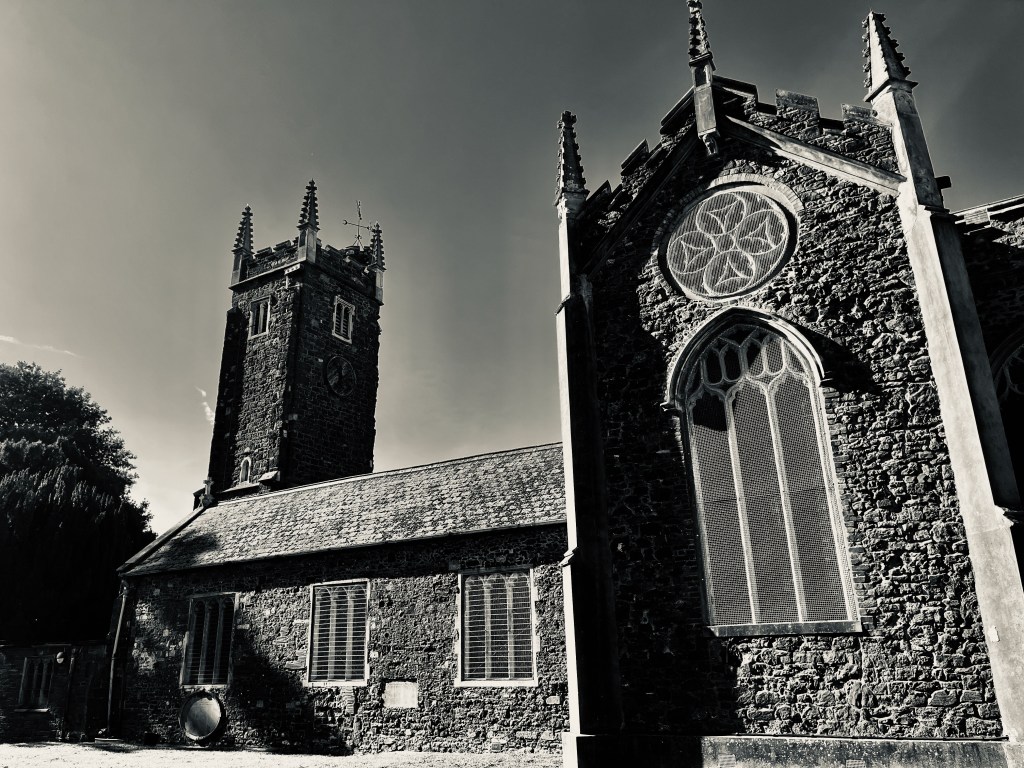
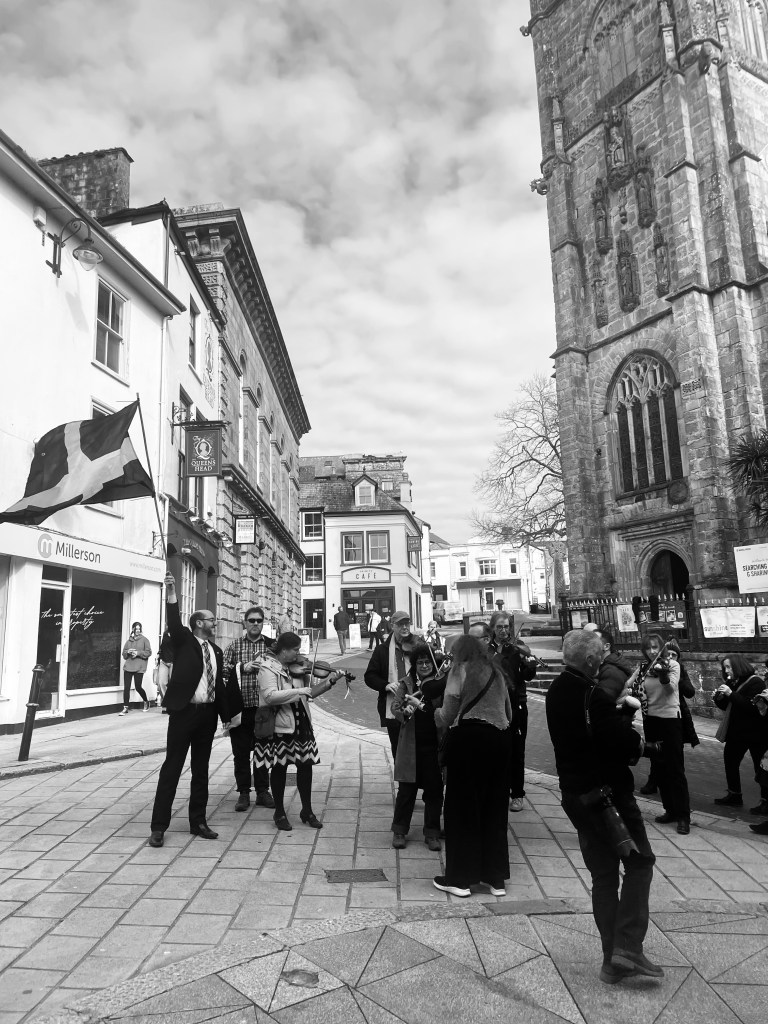
St Piran’s Day, St Austell, Gool Sen Peran, Sen Austel – photo author’s own

Dydh da.

Dew mis a dhysk Kernewek yw passys lemmyn.

Yn an termyn ma my a dhyskys meur: pyth a help dhymm dyski, pyth yw an haval dhe Gymraeg, ha pyth sort Kernewek my a vynn leverel.

Hello (good day).

Two months of learning Cornish have now passed.

During this time I have learned a lot: what helps me learn, what is similar to Welsh, and what kind of Cornish I want to speak.

Consolidating Patterns

At the end of the second month of this project, a number of patterns are beginning to emerge in my experience of learning Kernewek.

During February I continued working steadily through the Desky Kernôwek Bew (DKB) course, usually studying for around twenty to thirty minutes a day. The routine remained quite consistent: active recall exercises, repetition lessons, and short spoken reflections recorded immediately afterwards.

A simple rule has guided the process. If I can reproduce roughly eighty percent of the material, I move on. This prevents getting stuck in endless repetition and keeps the language moving forward.

Certain grammatical patterns have begun to settle quite naturally. One example is the expression of necessity:

Res yw dhymm – I have to
Yw res dhymm? – Do I have to?

These kinds of short constructions are now becoming fairly automatic. Longer, multi-clause sentences remain more difficult, especially when they appear quickly in spoken input. This seems typical of spoken-first learning: the building blocks settle first, while more complex structures follow later.

The Persistent Puzzle of “About It”

Like many learners, I seem to have developed a few personal “problem phrases”.

During this month, one of these was the various expressions meaning “about it.” Although I could usually understand the meaning, the exact phonological form proved surprisingly difficult to anchor. Even after several repetitions I sometimes struggled to hear the phrase clearly enough to reproduce it confidently.

This difficulty was not really about vocabulary itself. New words themselves were usually easy enough to learn. Instead the challenge seemed to lie in hearing and remembering small grammatical chunks embedded inside longer sentences.

Gradually the phrase has begun to sound more familiar, but it still feels slightly unstable.

Welsh as Bridge and Interference

Throughout the month the influence of Welsh has been constant.

In many cases it has been extremely helpful. Vocabulary parallels such as:

mergh / merch – daughter
mab / mab – son

provide immediate recognition and make new words easier to remember.

More interestingly, the logic of the language often feels familiar. Some Cornish sentence patterns have a distinctly Welsh grammatical feel, even when the vocabulary itself differs.

At the same time, Welsh occasionally interferes. For example, I often feel the instinctive urge to insert the Welsh particle yn before verbs in progressive constructions, even though this does not belong in Cornish.

Interestingly, the influence has not been entirely one-directional. On one occasion I noticed Cornish words briefly appearing when I was trying to speak Welsh (a-vorow instead of Welsh yfory), suggesting that the two Brythonic systems are beginning to interact in both directions.

Learning a closely related language therefore seems to create a constant balancing act between helpful transfer and subtle interference.

Pronunciation and Linguistic Identity

Perhaps the most important personal development this month has been clarifying which variety of Cornish I want to speak.

The DKB course is largely based on Late Cornish, but as the course progressed I increasingly felt drawn back toward Middle Cornish, which I had encountered previously. The main reason is phonological familiarity. Middle Cornish pronunciation seems closer to Welsh, particularly the Welsh I speak with a South Wales accent.

This matters to me for reasons of identity. I do not want to adopt an artificial Cornish accent. I would rather speak Cornish in a way that feels authentic to my own linguistic background: a Welsh-speaker from Glamorgan speaking Kernewek.

In that sense, learning Cornish is becoming less about reproducing a standard pronunciation and more about finding a personal voice within the language.

Hearing Cornish in the Wild

Actual opportunities to speak Cornish have still been limited, which is perhaps not surprising given the small number of speakers.

However, at the beginning of March I attended Gool Kevrennow in St Austell, a Cornish cultural festival celebrating Cornish-Welsh connections. There I heard at least some Kernewek spoken in everyday interactions: phrases such as myttin da, meur ras, pur dha, and splann. I even managed to mumble a hesitant dydh da at one point.

Although brief, it was encouraging simply to hear the language used in a social setting.

The festival emphasised the deep historical connections between Wales and Cornwall: linguistic, cultural, economic, religious, and musical. Both regions share a long Brythonic heritage, and historically both were often described from outside as part of the wider category of Welsh, in the old Germanic sense meaning “foreign” or “non-Germanic peoples”.

Experiencing the cultural context reinforced why learning the language matters to me, and, although I spoke very little Cornish myself, attending the festival felt like a tentative first step into the wider language community.

Expanding the Learning Environment

Towards the end of the month my learning activities began to widen beyond the course itself.

I have started reading a Cornish translation of Tintin, An Kanker ha’y Dhiwbaw Owrek (The Crab with the Golden Claws). Previously I found it extremely difficult, but with the help of digital tools and translation assistance it has become a much more accessible resource.

I have also been exploring other materials: listening to Cornish music, following Cornish-language news broadcasts, and using a small pocket dictionary and grammar guide.

Another interesting discovery came from a talk at Gool Kevrennow about digital resources. The Gerlyver online dictionary, which I have already used, and a related Kernewek corpus project, which I haven’t, were mentioned, as well as Cornish courses on the Memrise platform. Given the small size of the language community, digital tools clearly have a potentially important role in supporting learners.

Looking Ahead

As the final lessons of the DKB Level 1 course approached, I noticed a slight drop in motivation to perfect individual clauses, perhaps reflecting the sense of transition between structured learning and the next stage of the project. This feels like a natural point to pause and reflect.

Rather than immediately starting another structured course, the next phase may involve more reading, listening, and eventually conversation practice. I have already signed up for an online Cornish day course in April, which should provide more opportunities to use the language actively.

I am also considering the possibility of starting a small Cornish conversation group in Exeter, perhaps meeting once or twice a month. Please get in touch if you are interested. 

Finally, one unexpected realisation during this month is how important the research dimension of this project has become. Committing to documenting the process has strengthened my motivation. The project is no longer just about learning a language; it is also about understanding the experience of learning it.

And increasingly, it feels like that the journey may lead somewhere I had not originally anticipated.

Ha lemmyn yth esov ow talleth an nessa kamm yn ow hentr dhe dhyski Kernewek.

Meur ras!

And now I am beginning the next step in my journey of learning Cornish.

Thank you.

Trebanessa!

Month 2 Vocabulary

Here are some words and expressions that I’ve used a lot this month:

  • res yw dhymm — I have to
  • mergh — daughter
  • mab — son
  • a-vorow — tomorrow
  • dydh da — hello / good day
  • meur ras — thank you
  • pur dha — very good
  • splann — excellent
  • termyn — time
  • dalleth — to begin

Exploring Cornish Language Acquisition: Month 1 Review

A Language Project in Practice – Ragdres Yeth yn Praktis

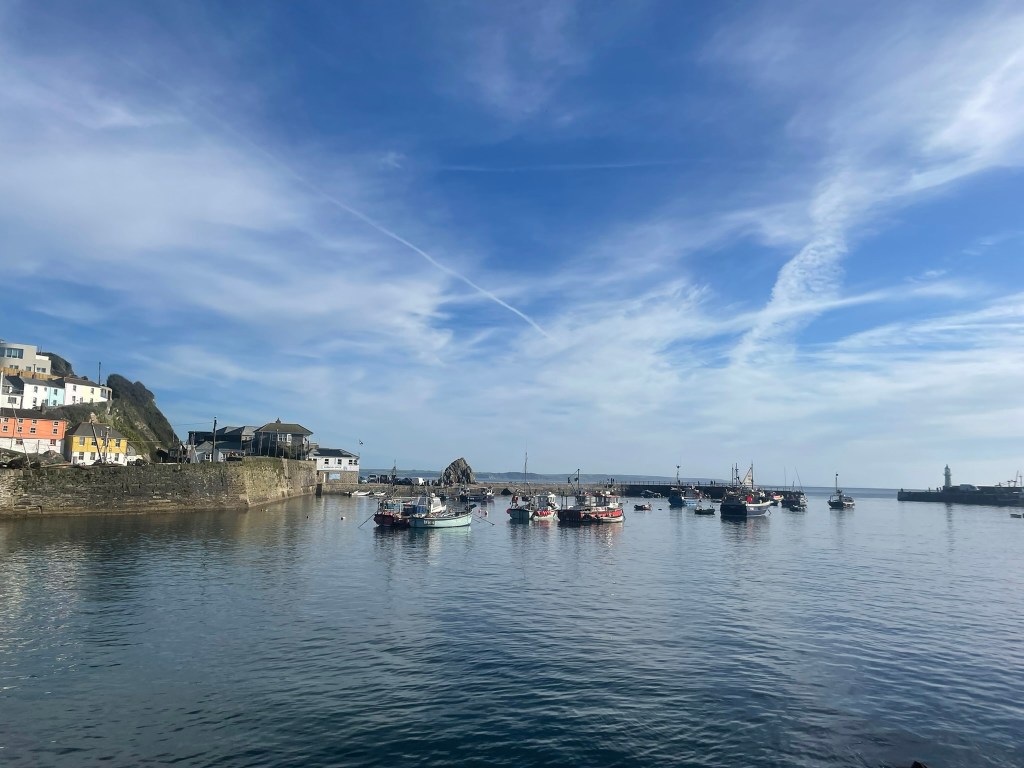
Mevagissey Harbour, Cornwall / Porth Lannvorek Kernow, photo author’s own

Learning Kernewek: Month 1 – Rebuilding

A Language Project in Practice (10 January – 11 February 2026)

Thirty-two journal entries.
Around fifteen hours of structured study.
Two missed days.

That is the practical shape of Month 1.

In my previous post, I described this as both a personal language commitment and a small research project into how revived languages are learned in practice. After one month of daily journalling, patterns are already visible.


Reconstructing Grammar

As I had previously studied some Cornish, one term of weekly online lessons and a 15 lesson course with SSIW, much of this month involved reconstruction rather than acquisition.

Vocabulary resurfaced relatively easily. Grammar required more deliberate rebuilding. Much of that rebuilding happened through repetition of DKB lessons, revisiting SSIK material, and occasional checks in the Gerlyver dictionary to clarify differences between Middle and Late forms.

For example:

Yma marth dhymm
(There is surprise to me.)

This structure mirrors Welsh patterns and once felt natural. Re-establishing that naturalness required repetition.

Month 1 was less about learning new material and more about stabilising an internal system that had partly faded.


Negotiating Variation

Modern Cornish presents learners with revived varieties. Throughout the month, I found myself moving between Middle and Late Cornish forms.

Sometimes the differences are small but noticeable. Words such as lemmin versus lebmin for “now,” or slight shifts in pronunciation, subtly change how the language feels when spoken aloud. As a Welsh speaker, Middle Cornish feels more intuitive and reduces the effort needed to produce the language.

This negotiation is not simply technical. It affects fluency, confidence, and how one situates oneself within a revived language community.


A Persistent Difficulty: “I Know”

The clearest recurring difficulty was with small everyday phrases such as:

Mi a hora fi (I know)
Ne a hora ni (We don’t know)
Ne a hora ni travyth eta (We don’t know anything about it.)

These expressions appear simple, but they sit at the centre of ordinary conversation. They involve negation, word order, rhythm, and agreement. For reasons I am still untangling, they proved stubborn.

The main strategy so far has simply been repetition, returning to the same lesson rather than rushing forward. Interestingly, this difficulty emerged only after simpler patterns had begun to settle. It feels less like a setback and more like moving into a new layer of the language.


Welsh as Scaffold

Welsh is always present in this process.

Cognates such as moy (more) and familiar constructions often make new material easier to grasp. At times Welsh pronunciation slips in. More often, it provides reassurance.

The experience is not one of one language interfering with another. It feels more like working within a shared Brythonic space.


From Internal Practice to Social Intention

Late in the month, a new type of sentence appeared in my journal:

My a vinca ty dha dhalath kewsel Kernewek genovi
(I would like you to start speaking Cornish with me.)

That sentence points outward. It imagines conversation rather than rehearsal.

Access to a regular Cornish-speaking community remains limited for me, so imagined dialogue often precedes real interaction. For a revived minority language, that outward turn feels significant.


What Month 1 Achieved

Month 1 did not produce fluency.

It produced:

  • Clear awareness of what feels unstable
  • Reduced anxiety around mutation and word order
  • A workable position within Middle and Late variation
  • A sustainable daily learning rhythm
  • The beginnings of communicative intent

In short, it built a framework.


Looking Forward

Month 2 may turn out to be less about learning new material and more about settling what has already begun. The phrases that resisted in Month 1, especially everyday ones like “I know” and “I don’t know,” might become easier with repetition.

I may repeat some recent lessons rather than moving on immediately, and perhaps begin reading short texts aloud to see what carries over into speech. It will be interesting to notice whether the language starts to feel a little less constructed and a little more automatic.

For now, the aim is not speed or fluency, but steadiness.

Trebanessa!
Kevin


Glossary & Context

  • DKB (Desky Kernôwek Bew) – audio-based Cornish course
  • SSIK (SaySomethingInCornish) – speaking-focused methodology
  • Bora Brav – accessible Cornish textbook
  • Gerlyver Kernewek – online Cornish dictionary

Varieties:
Modern Cornish draws on historical stages, particularly Middle Cornish (c. 1200–1600) and Late Cornish (17th–18th century). Contemporary learners often encounter both.