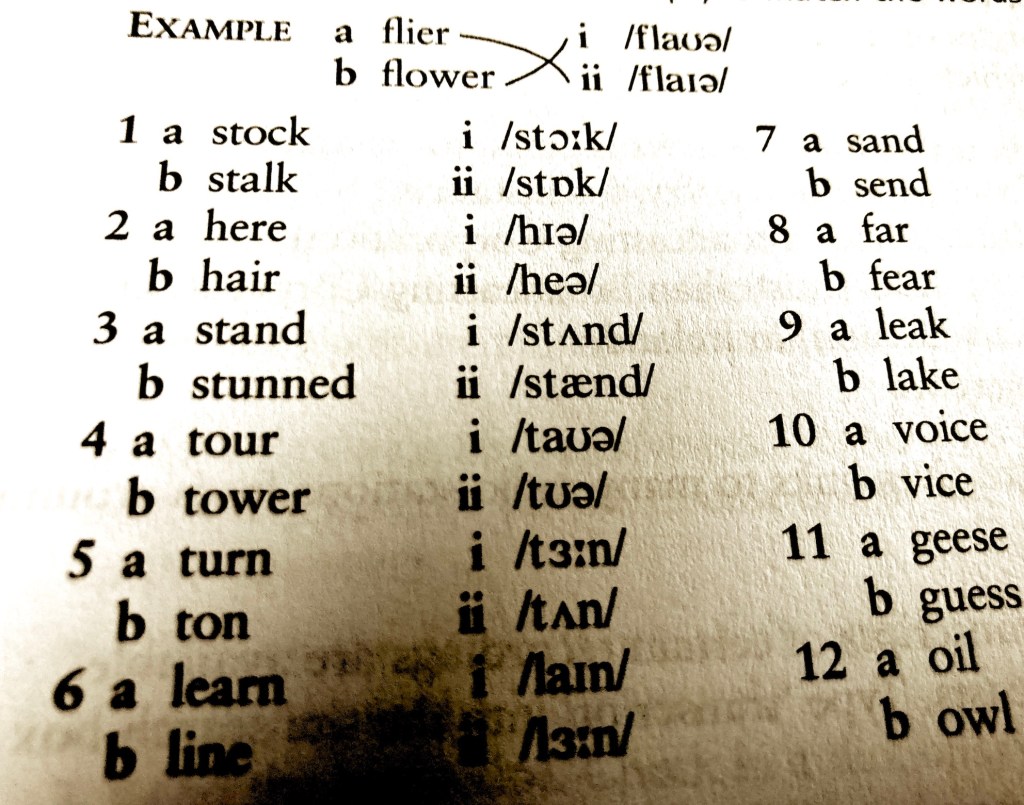
Source: English Pronunciation in Use, Advanced, Martin Hewings, Cambridge
I am often asked by students to help them improve their English accents. I usually respond that accents are only really a problem if they are a barrier to communication. That is if they prevent people from understanding the speaker. However, this answer rarely satisfies those students who are self-conscious about their English language skills. Different first languages tend to have different impacts on the way non-native speakers pronounce English. I will look at different languages’ influence in greater depth over the next few weeks, but for now, I will provide a brief introduction to the subject.
The impact of a non-native speaker’s first language on their English pronunciation varies. Firstly, phonological differences in native languages can influence sounds produced in English, leading to accents. For example, speakers of languages with different phonetic inventories may find certain English sounds challenging, such as the sounds associated with the letters ‘th’. Additionally, intonation patterns and stress placement can be affected by the native language, influencing overall pronunciation. Hence, native French speakers’ tendency to stress the final syllable of words. However, with practice and exposure, individuals can improve their English pronunciation. As, I mentioned above, over the next few weeks, I will be covering how different languages influence speakers’ pronunciation of English.
Thanks for reading.
Kevin


 mondolingo